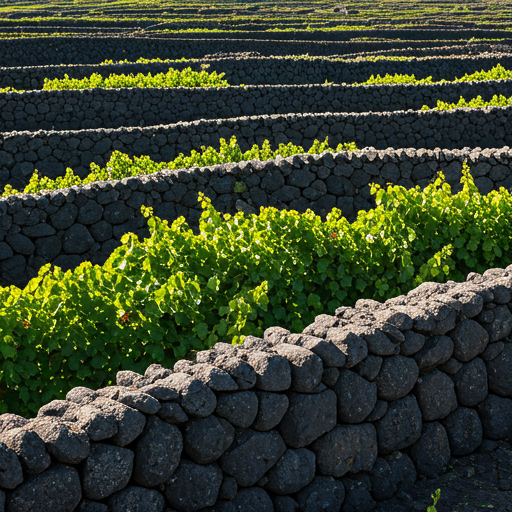
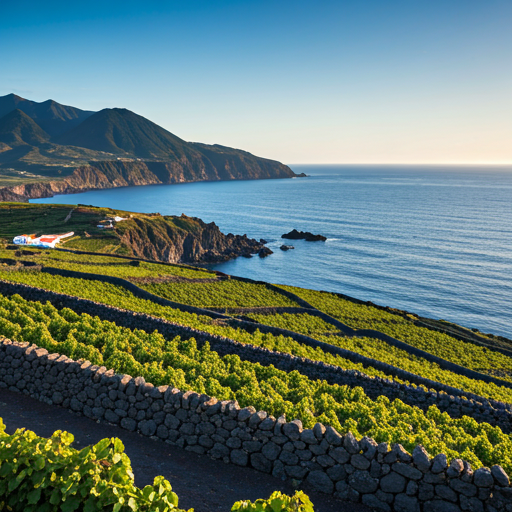
On Pico, the landscape is not merely natural — it is also built. The basaltic stone walls that divide the vineyard into small parcels are at once shelter, sundial and archive of all who have passed here. An architecture born of necessity, elevated to the category of art.
A Heritage of Stone
Built over centuries, the black basalt walls protected the vines from Atlantic winds, retained heat during the night and marked the boundaries between families. Each stone placed was an act of faith in the future.
Today, the curraletas of Pico are UNESCO World Heritage — recognising not merely the product, but the human system that makes it possible: the symbiosis between the winegrower, the stone and the sea.
“Those who look at the walls see stones. Those who know Pico see generations.”
The Future of the Walls
Maintaining the curraletas is work of hands, time and commitment. Each winter, wind and rain displace stones. Each spring, the winegrowers replace them — without mortar, only with gravity and the knowledge accumulated across generations.
At Quintas do Pico, the restoration of the walls is part of the annual calendar. Not from legal obligation, but out of respect for those who built them and for those who will inherit them.

 English